Having written three technical books about flooding, I’ve long been interested in writing a more general interest book, suitable for anyone who would like to know more about the topic. The end result is Floods: understanding, managing and reducing the risks to be published by Oxford University Press in early 2027.
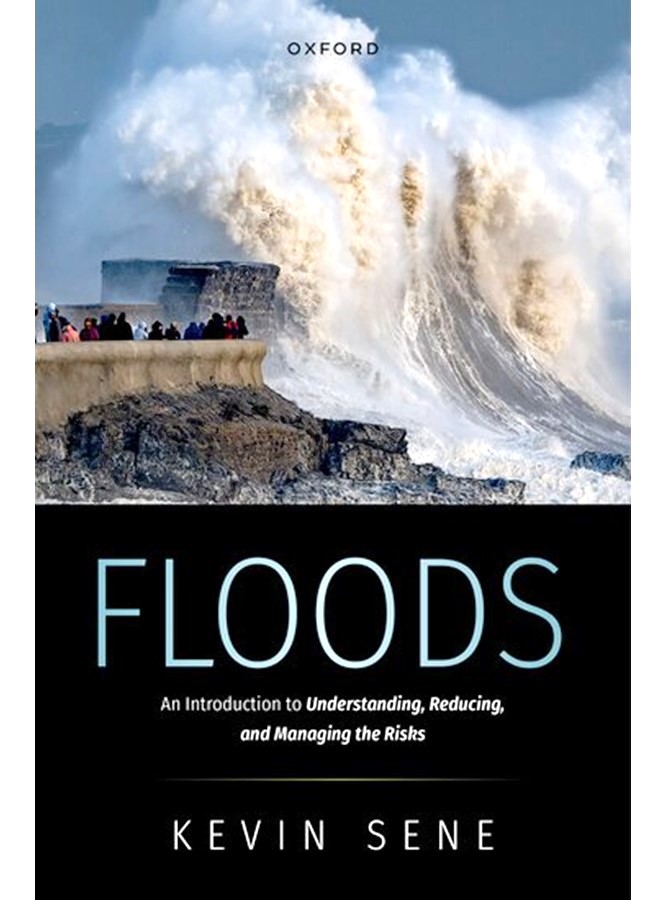
It provides a concise non-mathematical introduction to the subject. The areas covered include flood mapping, flood forecasting and warning, flood insurance, and structural measures, such as levees, dams and washlands. It also discusses nature-based and community based solutions, with examples from around the world.
It is now available for pre-order from:
I’ll be updating this page closer to the date of publication but in the meantime here is the description from the publisher. There is also more about my technical books at the end of this page, which are published by Springer and intended particularly for practitioners, researchers and university students.
Oxford University Press description
- Provides a concise non-mathematical introduction to this multidisciplinary topic
- Includes case studies highlighting practical approaches to flood risk management
- Offers an accessible and clear writing style with a variety of international examples
Floods are one of the most devastating natural hazards, impacting the health and livelihoods of millions of people each year and causing billions of dollars in damage. Approaches to flood risk management include constructing levees and storage basins and using non-structural measures such as flood warning and forecasting systems, flood insurance, and floodplain regulation. Nature based solutions are also increasingly advocated for, in which natural processes are used to improve flood resilience, such as through river restoration and green infrastructure such as rain gardens and wetlands. Community based approaches are also widely used, such as flood proofing and raising public awareness of the risks from flooding.
This book provides a concise non-mathematical introduction to these various topics, ranging from the latest technological developments to lower cost solutions where budgets are more limited. Potential readers will include anyone with an interest in understanding why floods occur and what can be done to reduce their impacts. The types of flooding considered include riverine and coastal floods, flash floods, debris flows, ice jams, levee breaches, dam breaks, and urban flooding from both surface water and pluvial sources. Technological developments discussed include the use of ensemble techniques in flood forecasting, innovations in regional flood mapping, and adaptation approaches to dealing with climate change.
Throughout, short case studies help to bring the topics to life, such as on community flood warning systems, flash flood forecasting, developing flood maps, and lessons learned from previous flood events, including examples from the USA, the UK, the Netherlands, Rhine Basin, Bangladesh, and Nepal.
Scientific books for practitioners and researchers
The three technical books I mentioned earlier are called:
- Hydrometeorology: forecasting and applications
- Flash floods: forecasting and warning
- Flood forecasting, warning and emergency response.
They are intended for use by practitioners and researchers and also provide background for university courses in areas such as civil engineering, water resources, meteorology and hydrology.
Part of the motivation for writing them was working on practical problems as a consulting engineer, proving a great help in seeing both what works in practice and where gaps in understanding arise. Typically this has involved managing projects, working as a key technical expert, writing good practice guidelines and/or running training courses.
Examples have included projects for Defra, DFID, the Environment Agency, European Commission, GIZ, SEPA, various water companies and the World Bank, whilst places where I’ve worked include the UK, USA, Spain, Italy, Lebanon, Somalia, Uganda, Kenya, Malawi, Tanzania, Lesotho, Mozambique, Namibia, South Africa, India, Sri Lanka, Sumatra and Central Asia.
The following paragraphs give more details about each book and the following post gives insights into writing the Hydrometeorology book, which goes beyond flooding to consider other topics such as droughts, water resources and climate change.
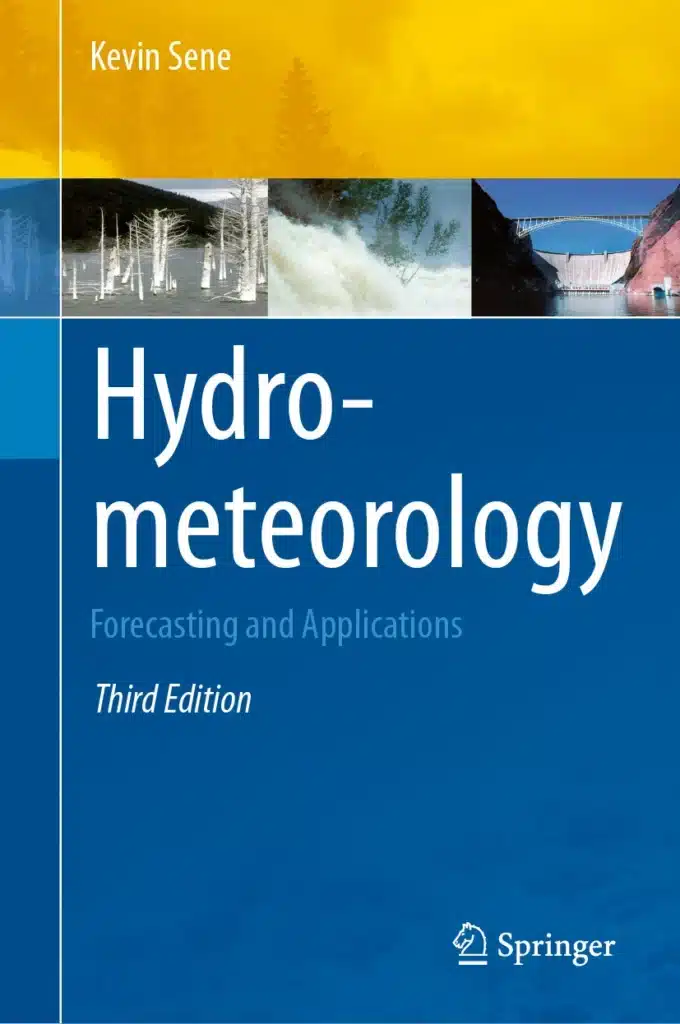
Hydrometeorology: forecasting and applications
Link: Hydrometeorology: Forecasting and Applications (3rd edition), Springer, 2024
Summary:
Hydrometeorology: Forecasting and Applications is the latest edition of this award-winning book intended for practicing engineers and scientists. It also provides useful background for undergraduate and postgraduate courses in engineering, earth sciences, environmental sciences, geography, meteorology and hydrology.
Operational examples include applications from the USA, UK, the Netherlands, Bangladesh and Nepal. Throughout, there is a focus on end-to-end warning systems, forecast uncertainty and risk-based and impact-based approaches
Key themes • flood warning • drought early warning systems • meteorological observations • catchment monitoring • hydrometry • meteorological forecasts • hydrological forecasts • demand forecasts • reservoir operation • water resources • water quality forecasts • end-to-end warning systems • forecast uncertainty • data assimilation • probabilistic forecasts • impact-based forecasting and warning
Available in hardcover, softcover and digital (ebook or pdf) formats, with individual chapters available digitally too.
The first edition received an award as part of the prestigious Atmospheric Science Librarians International (ASLI) nominations for the best book of the year in the fields of meteorology, climatology and atmospheric sciences, with the citation:
“Honorable mention for an authoritative review of recent developments in hydrometeorological forecasting.” ASLI Choice Awards 2010
I would recommend this book to anyone who wishes to get an overview of recent developments in meteorological forecasting techniques that are reflected in the performance of operational hydrologic models, as well as to water decision makers who will benefit from the improved forecasts…I am not aware of any other book as comprehensive as this one that covers all aspects of hydrometeorology.”
From a review in the Bulletin of the American Meteorological Society.
Flash floods: forecasting and warning
Link: Flash Floods: Forecasting and Applications, Springer
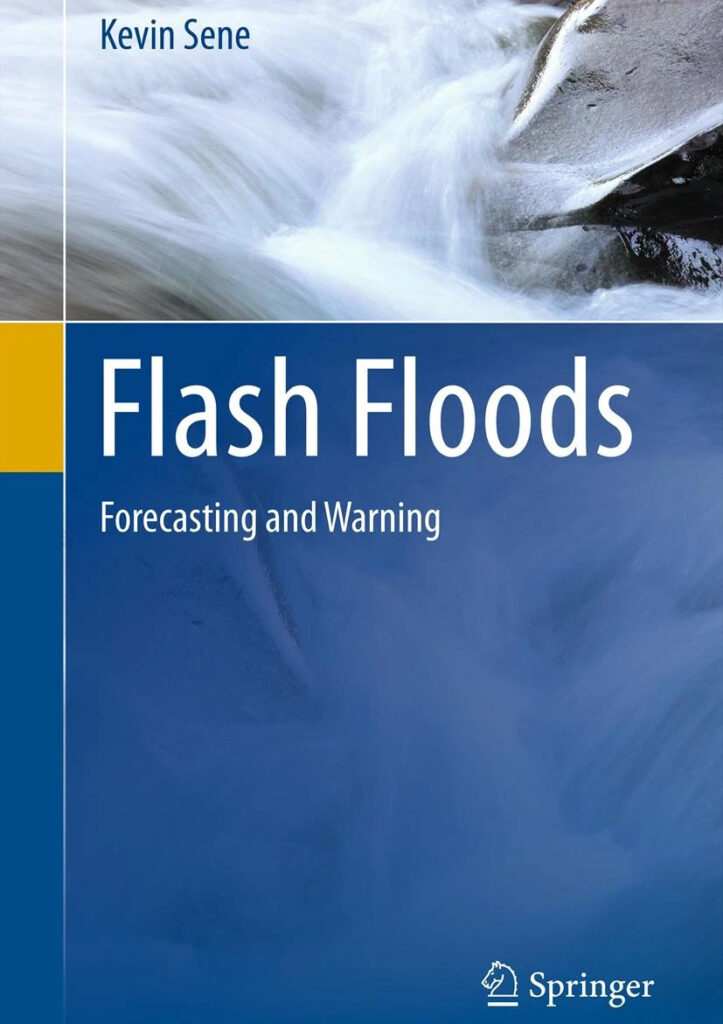
Summary: Flash floods typically develop in a period a few hours or less and can arise from heavy rainfall and other causes, such as dam or flood defence breaches, and ice jam breaks. This book describes recent developments in techniques for monitoring and forecasting the development of flash floods, and providing flood warnings. Topics which are discussed include rainfall and river monitoring, nowcasting, Numerical Weather Prediction, rainfall-runoff modelling, and approaches to the dissemination of flood warnings and provision of an emergency response.
Provides an international perspective, drawing on recent research and examples from Europe, the USA and elsewhere. Treats the topic in an integrated way, discussing research findings from meteorology and hydrology, and some of the issues surrounding the provision of an effective response to flood warnings (e.g. evacuation of properties)
Springer
Flood forecasting, warning and emergency response
Link: Flood Warning, Forecasting and Emergency Response, Springer
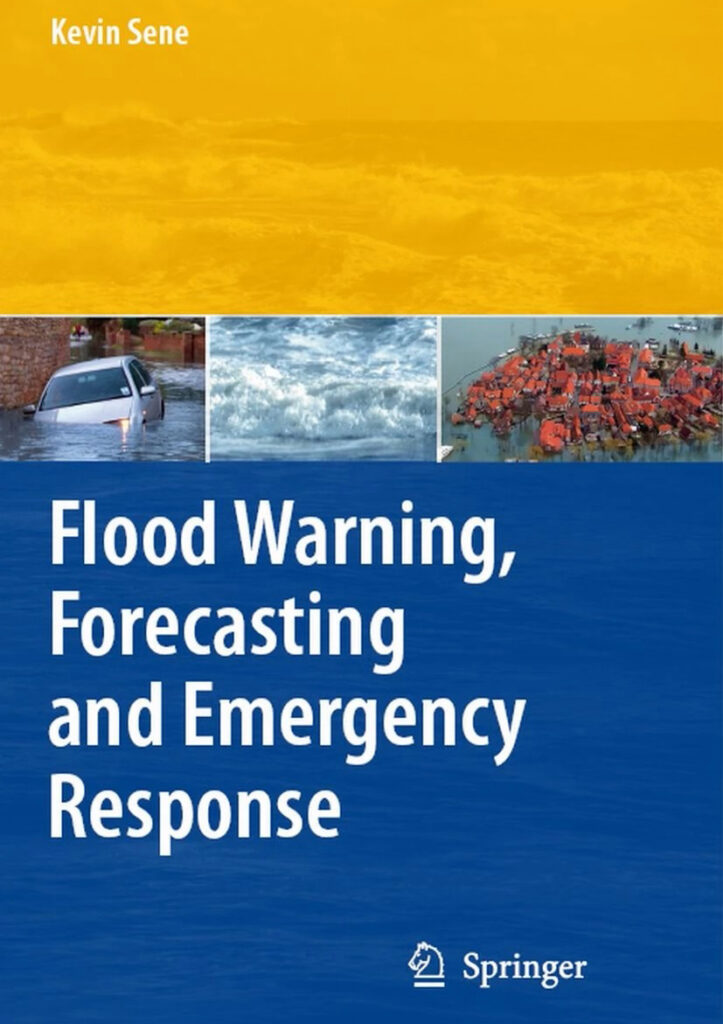
Summary: This book provides a comprehensive account of the flood forecasting, warning and emergency response process, including techniques for predicting the development of flood events, and for issuing appropriate warnings. Related topics, such as telemetry and information systems, and flood warning economics, are also discussed. The material on meteorological, hydrological and coastal modelling and monitoring may also be of interest to a wider audience.
For perhaps the first time, this book brings together in a single volume the many strands of this interesting multidisciplinary topic, and will serve as a reference for researchers, policy makers and engineers.
Springer
Book chapters
With co-authors, I have also contributed to the following book chapters:
Uncertainty Estimation in Fluvial Flood Forecasting Applications by Kevin Sene, Albrecht Weerts, Keith Beven, Robert J Moore, Chris Whitlow, Stefan Laeger and Richard Cross in Applied Uncertainty Analysis for Flood Risk Management, Edited by Keith Beven and Jim Hall, World Scientific, 2014 (link)
Flood Forecasting Model Selection: A structured approach, Kevin Tilford, Kevin Sene, Rahman Khatibi in Flood Risk Management in Europe: Innovation in Policy and Practice, Edited by Selina Begum, Marcel J. F. Stive and Jim W. Hall, Springer, 2007 (link)