This is a book intended for anyone interested in the weather, and particularly those who spend time in the great outdoors, from coastal and parkland walks to adventures in the high mountains or at sea. It also includes case studies from hiking and sailing experts and examples of what can go wrong for lack of a suitable forecast.
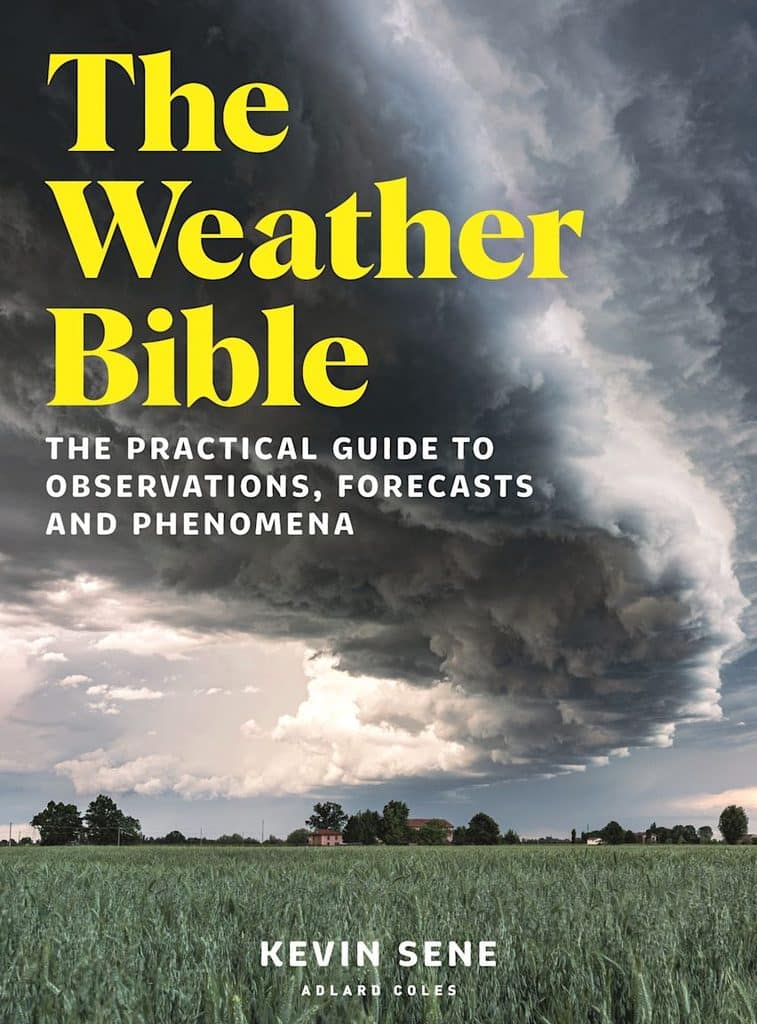
As a book, it was really interesting to research and write, building on my fascination with the weather, and time spent hiking, flying and sailing. That included the photographic aspects, chosen to illustrate different types of cloud formations and weather, including the passage of warm and cold fronts and the growth of cumulonimbus clouds during thunderstorms
It is available for pre-order now from:
I’ll be adding to this page closer to the date of publication but for now here is the publisher’s description of the book and the table of contents. I’ve also included links to some of my newsletter posts on the weather at the end of this page.
Bloomsbury description
An absorbing guide to understanding and interpreting the weather and forecasts, for all outdoor enthusiasts.
Grounded in the latest science, this beautifully illustrated book is your practical guide to all things weather, from how our global weather systems work to other-worldly phenomena such as the mesmerising Northern Lights. It also shares handy tips on how to interpret forecasts – perfect for walkers, cyclists, sailors and anyone heading outside.
Packed with beautiful photography and useful diagrams, The Weather Bible gives you a complete overview of climate zones from the tropics to the poles, as well as local effects in the mountains and at the coast.
Find out about the origins and science of weather sayings and folklore, read intriguing case studie and improve your own skills, whether it’s getting a hiking watch, using weather apps or setting up your own personal weather station, interpreting the wind and clouds or extrapolating local trends.
The Weather Bible is a wonderful treasure trove of fascinating and useful information for the armchair reader and anyone who spends time in the great outdoors.
Table of contents
- Introduction
1.1 Who is this book for?
1.2 How to use this book
1.3 What should a forecast provide?
1.4 Is weather lore useful? - A weather primer
2.1 The atmosphere
2.2 Clouds, fog and mist
2.3 The global circulation
2.4 Weather systems - Observing the weather
3.1 What do meteorologists use?
3.2 Where to get the latest information
3.3 Making your own observations
3.4 Cloud types and observations - Interpreting weather forecasts
4.1 How are forecasts produced?
4.2 Choosing which forecast to use
4.3 Coastal weather forecasts
4.4 Mountain weather forecasts - Adding local detail to forecasts
5.1 General approach
5.2 Coastal weather
5.3 Mountain weather
5.4 Weather photography
5.5 Developing your skills - Climate change
6.1 What can we learn from the past?
6.2 How are climate projections made?
6.3 Climate adaptation and mitigation
Glossary
Further reading
Online resources
Index
Acknowledgments
Weather-related posts
Here also are some selected weather-related posts from my free monthly newsletter that you may find interesting. Click on the following button if you’d like to subscribe: